Geoengineering Cost Analysis (2011)
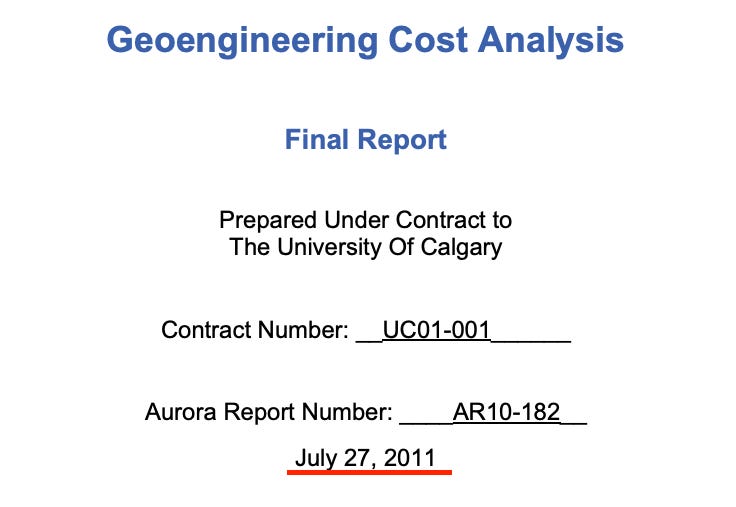
Final report by Aurora Flight Sciences in 2011

This article will cover a 2011 document entitled: “Geoengineering Cost Analysis” by Aurora Flight Sciences. I want to thank my friend for bringing this fantastic post to my attention; shared with us by ZeroGeoengineering.com on November 3rd, of 2016.
This was published a year or two after I was just beginning to notice the “lines in the sky,” as I’ve mentioned here, here, and here.
Let me also mention that Aurora Flight Services has contracted with DARPA for multiple projects to the tune of hundreds of millions of dollars.
Take note of who it’s published by. These are serious players for large defense organizations. I’ve added the hyperlinks so you can poke into their background a bit more.
“Prepared by Justin McClellan (BAE Systems), James Sisco (Blue Origin and Honeywell), Brandon Suarez (General Atomics Aeronautical, Honeywell, Aerospace engineer) , Greg Keogh (https://www.kratosdefense.com/)”
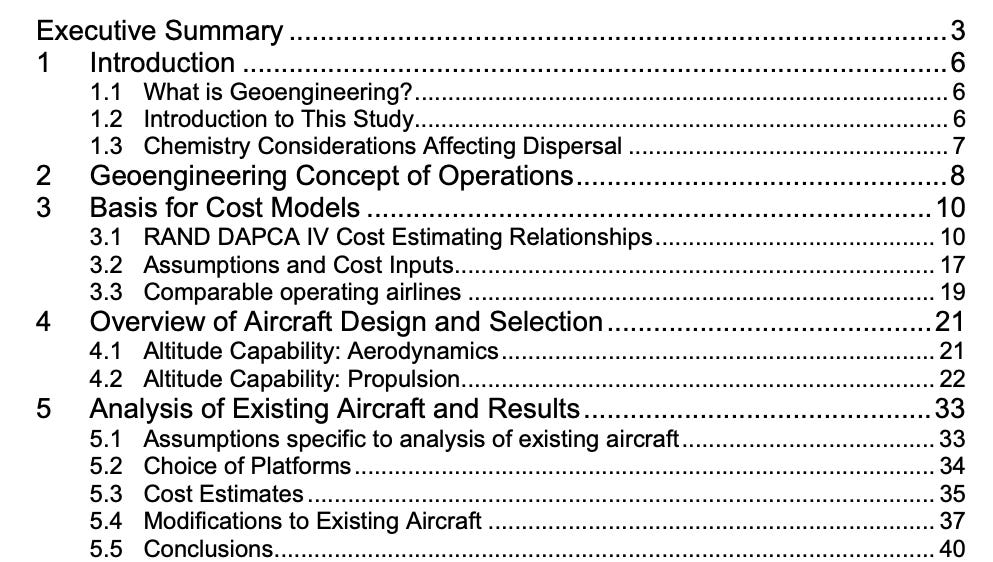
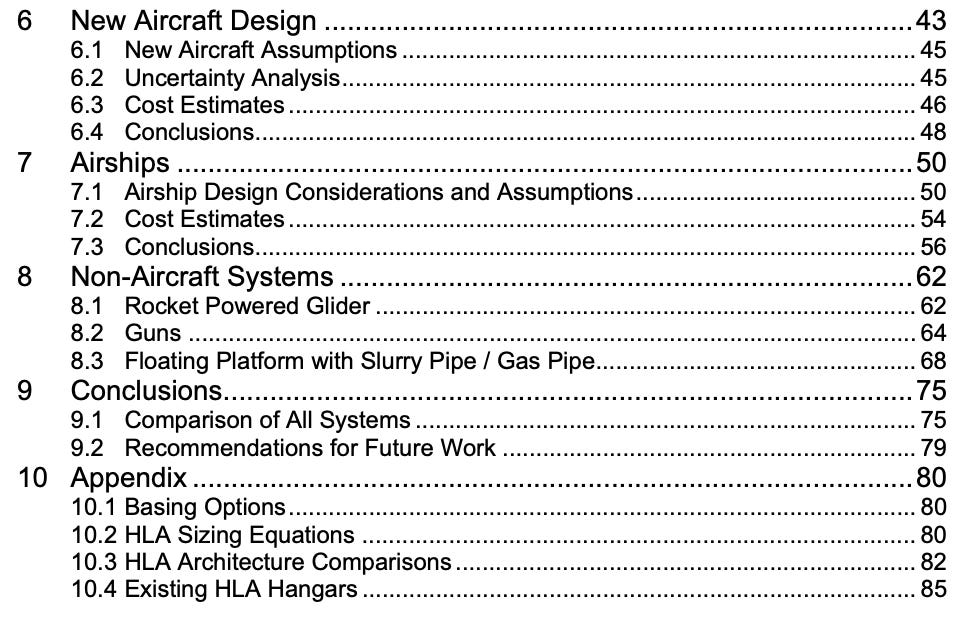
This report covers quite a few topics. I’ve selected a few pages that stood out to me. Again, you can find the entire 87 page document, here.
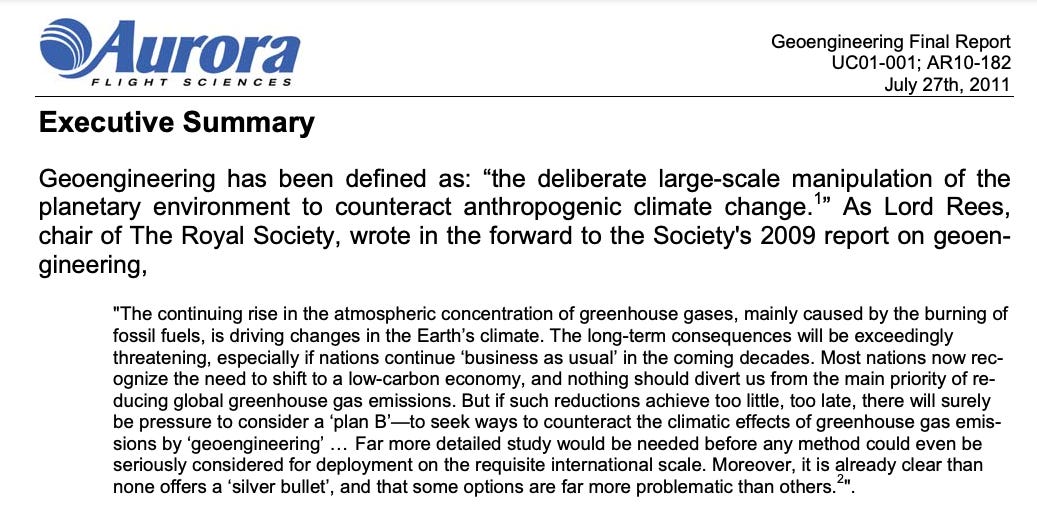
It starts with this executive summary of “the problem.” Essentially, it the same excuse all the geoengineering proponents use to justify the release of sun-dimming components into our atmosphere.
The irony is that they want to counteract “anthroprogenic climate change” with more anthroprogenic climate change. Hahahaha. They want to perform “deliberate large-scale manipulation of the planetary environment.”
Did they ask for our permission? No.
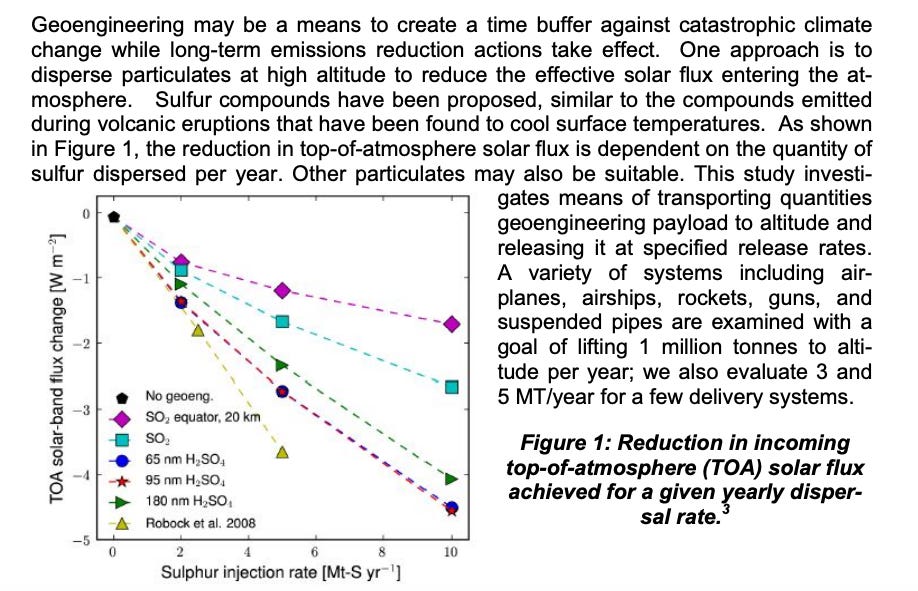
This next screenshot is disturbing (page 6):
They estimate needing 1,000,000-5,000,000 million tonnes of “mass” for “planetary scale SRM.” SRM=Solar Radiation Modification.
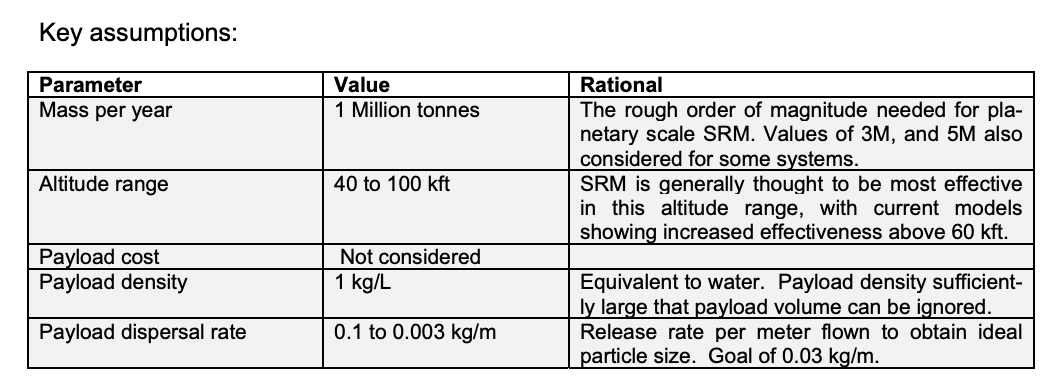
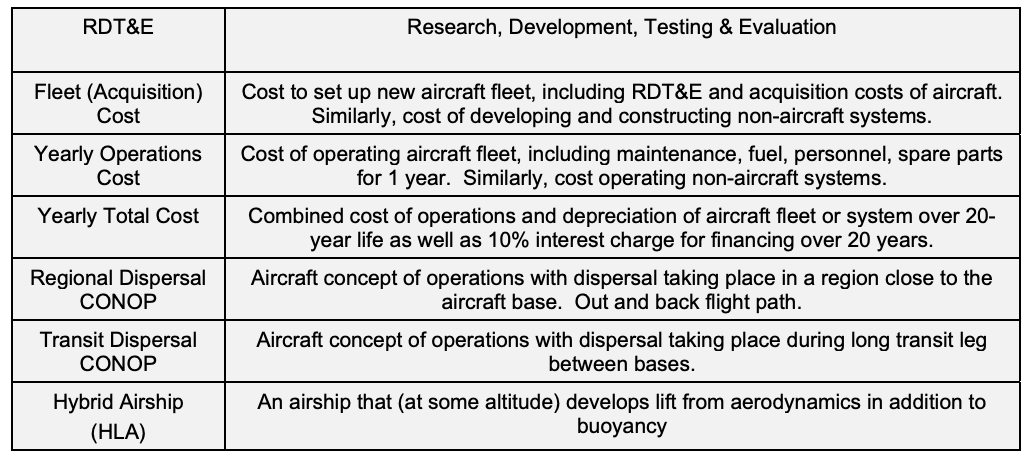
On page 8:
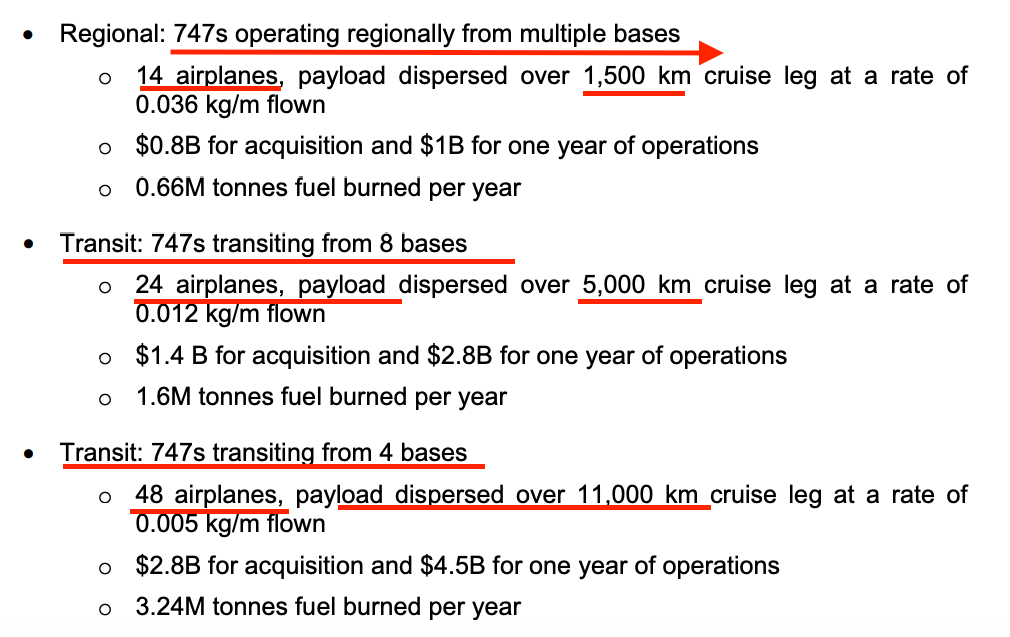
”For maximum cooling impact, the particulate payloads are best placed near the equator. This study assumes that the payload is released within latitudes 30°N and 30°S, though North-South basing location had minimal effect on cost. Transit operations, flying EastWest between equally spaced bases around the equator, were examined as a method to ensure adequate dispersal of the payload around the equator. Global winds aid in East-West dispersal so a smaller number of bases and shorter range systems (referred to as Regional operations) can be employed with minimal impact on dispersal. Regional operations allow the dispersal leg length to be dictated by the desired release rate of 0.03kg/m flown. This means the airplanes fly no further than they have to, on the order of 300-800 km, and fuel costs are minimized.”
Page 9, they breakdown how many aircraft flying at different distances from a set number of bases.
Page 10 touches on the choice of “bases:”
”Care is taken to choose bases capable of supporting high-tempo geoengineering operations and with the land available to allow any ramp or hanger expansion necessary. It should be noted that the costs of any facility improvement are not included in the cost analysis presented in subsequent sections. DHL recently built a state-of-the-art Central Asia Cargo Hub at Hong Kong Airport, the faculty is designed to handle 2.6M tonnes annually and required investment of approximately $1B.”
Page 19:
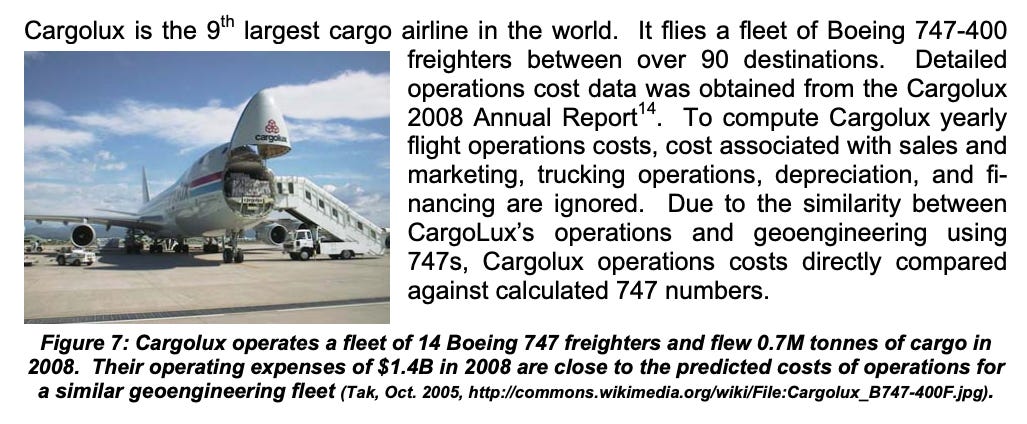
This paper considers cargo companies like Cargolux.
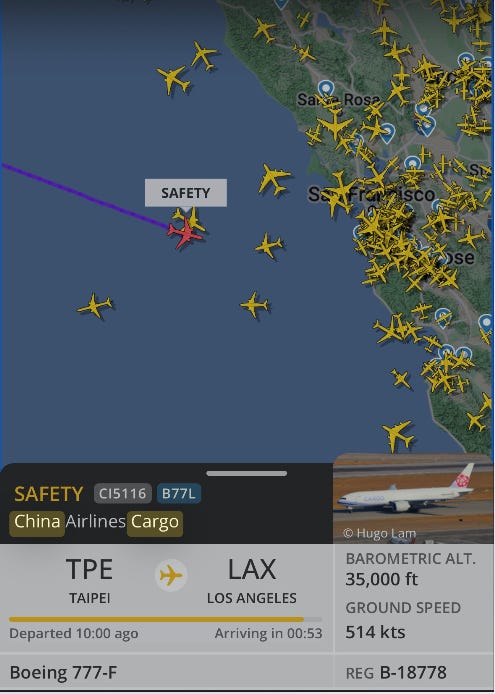
All I can think about is my own wonderings about the cargo planes I hear in the middle of the night over my head. I always wonder. Here is a screenshot I took of a flight by China Airlines Cargo. Why did it have the callsign called “safety?” Weird.
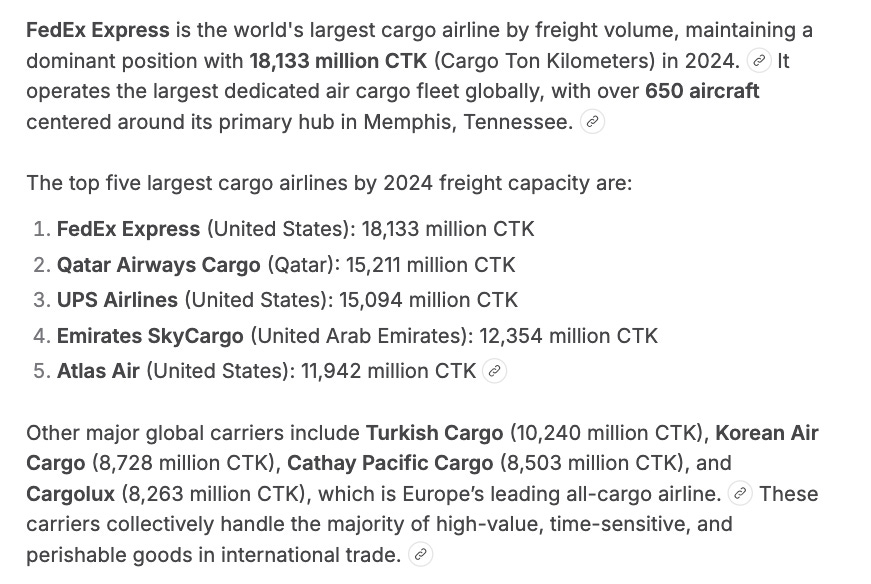
It lead me to look into the world’s largest cargo airlines. Here they are:
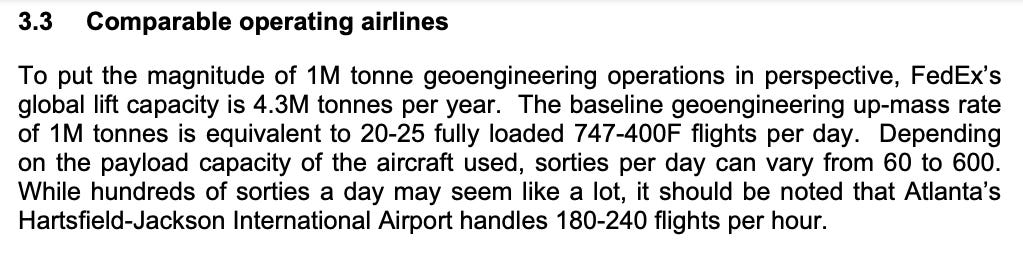
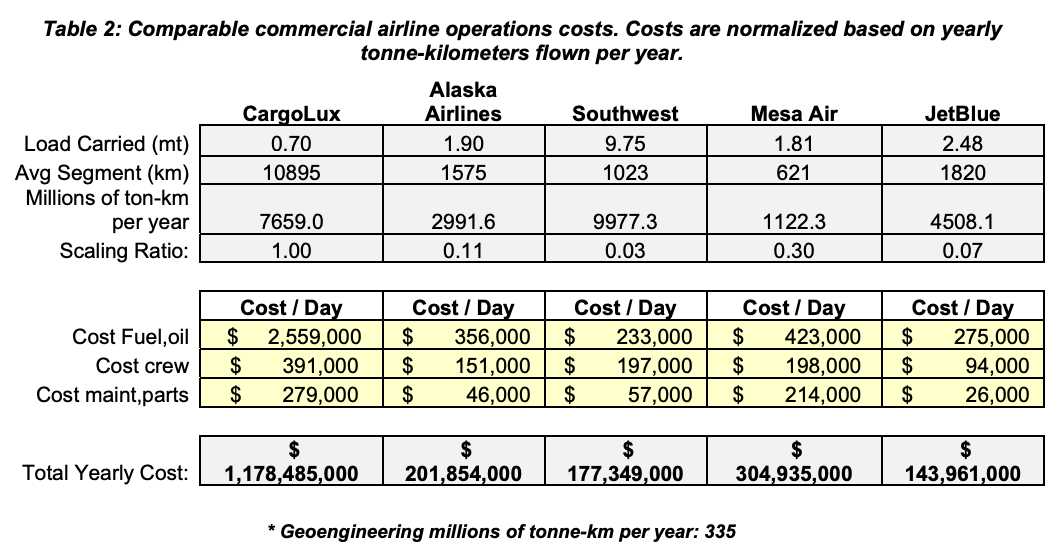
The paper goes on to compare airlines that could be used to scale geoengineering operations (page 21):
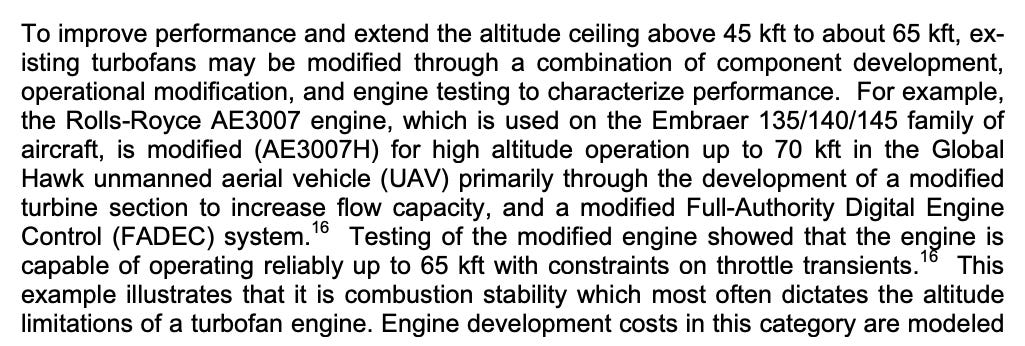
Page 24: “turbofans may be modified” to improve performance for higher altitude geoengineering operations:
Page 26:
”Aurora has been developing a propulsion concept called the Hydrazine Decomposition Air Turbine (HDAT) to enable aircraft operation at these high altitudes.
The concept, shown in Figure 11, decomposes hydrazine in a reactor to hot gaseous products consisting of hydrogen, nitrogen, and ammonia. These gases may be used to drive a turbine, which is not shown in Figure 11, but are ultimately sent to a combustor where the hydrogen is burned with compressed air.
The combustion products are then sent through the turbines to drive the fan and compressor before they are expanded through a nozzle to produce thrust. Flame stability is maintained in the combustor through the use of catalytic reactor technology.
Preliminary development suggests that the system could operate reliably up to 100 kft. By utilizing a dual combustor20, the engine could operate on conventional fuel at low altitude and transition to hydrazine at high altitude. Above 80kft, it is assumed that a radically modified or new design engine such as the HDAT is required. Development costs are estimated at $2B plus double the prototype engines acquisition CER cost. Fuel costs are also double due to the use of JPTS-type or other fuels.”
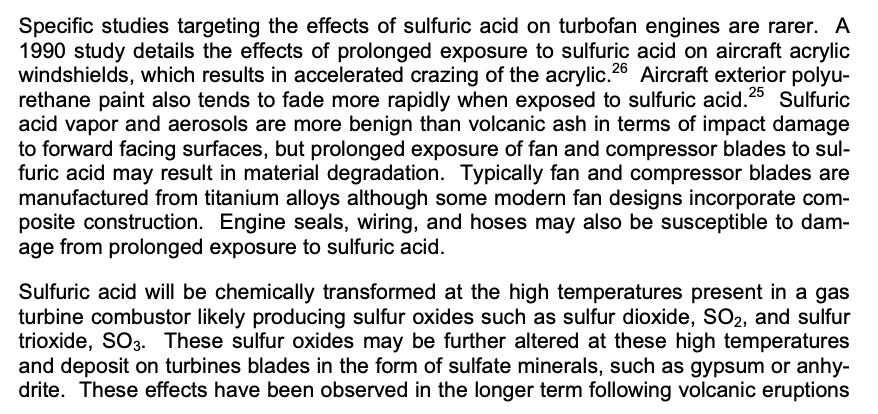
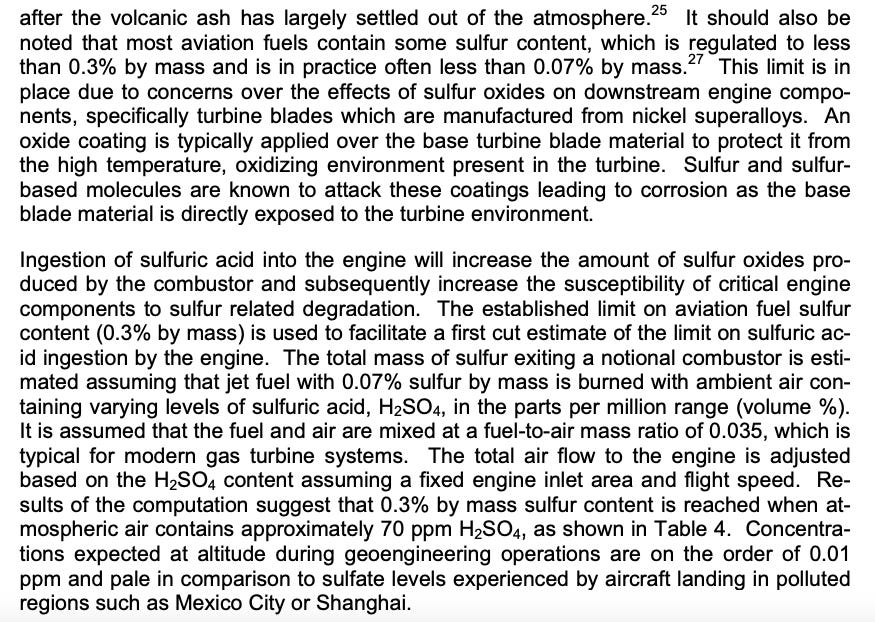
On page 30, they discuss the pros and cons of using sulfuric acid:
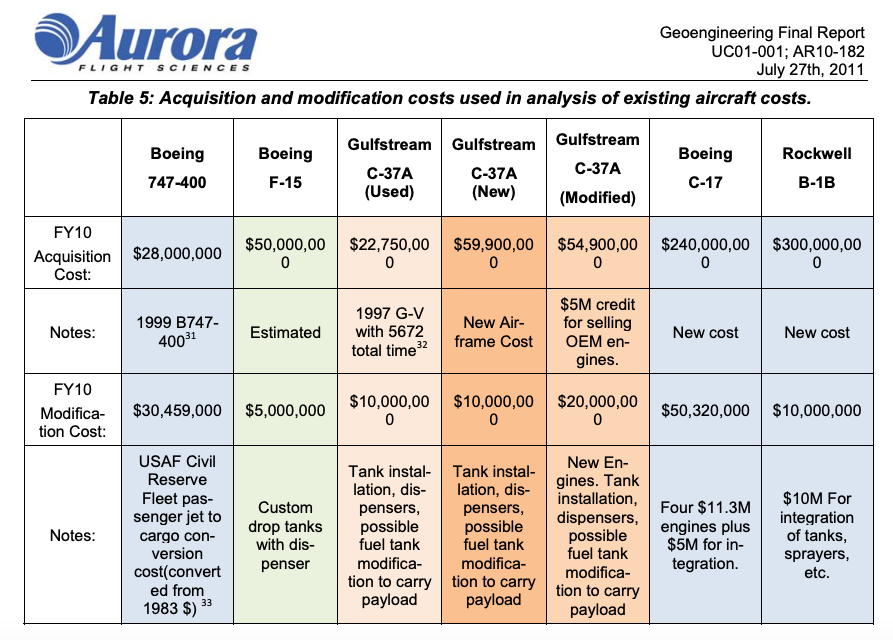
Next, they compare the acquisition and modification costs of EXISTING aircraft:
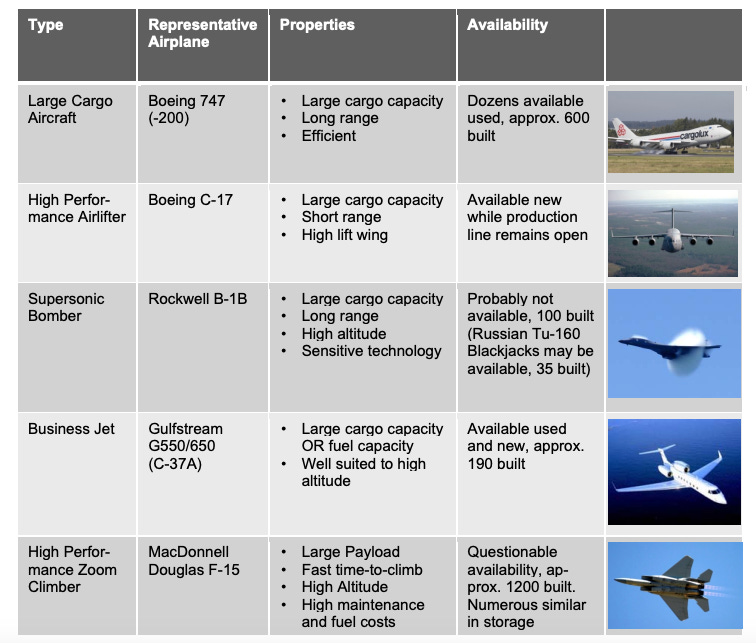
These are five comparison aircraft to consider based on cost/effectiveness of payload delivery:
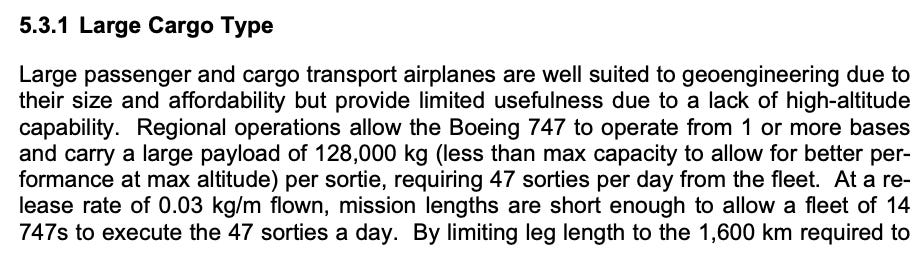
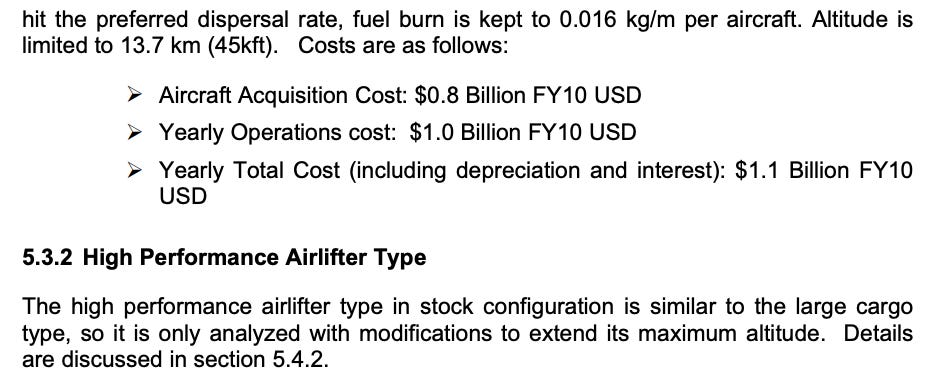
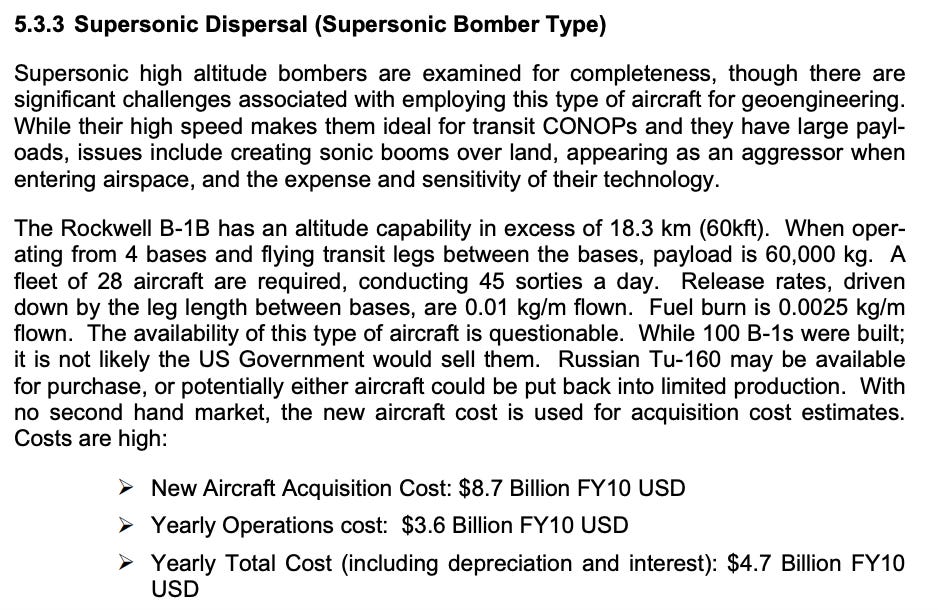
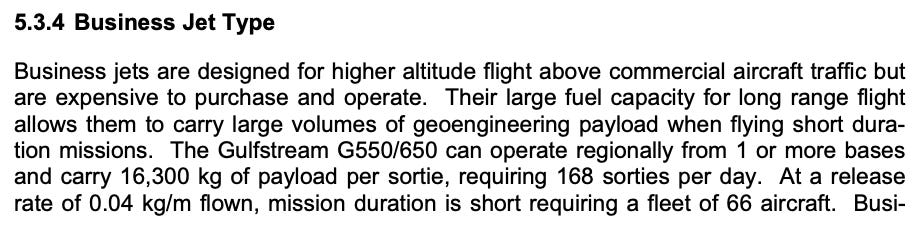
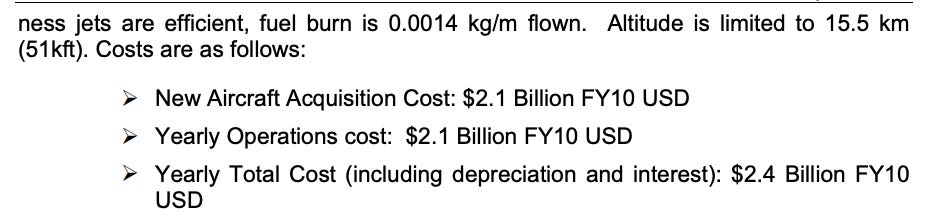
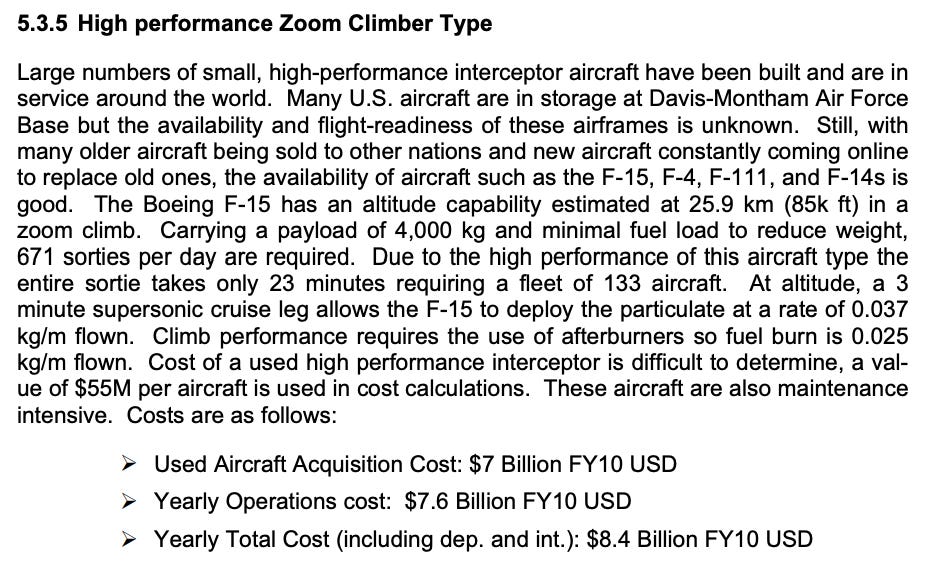
Here, they discuss modifications necessary to use existing aircraft for geoengineering:
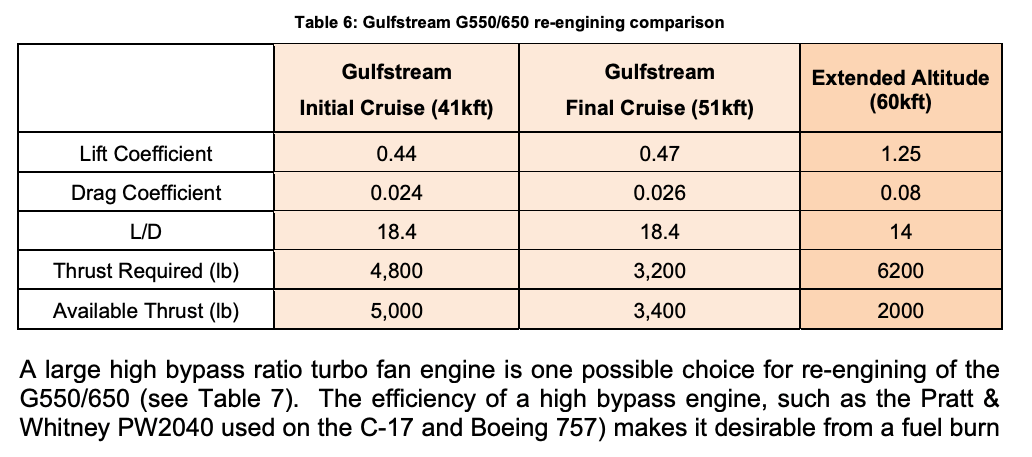
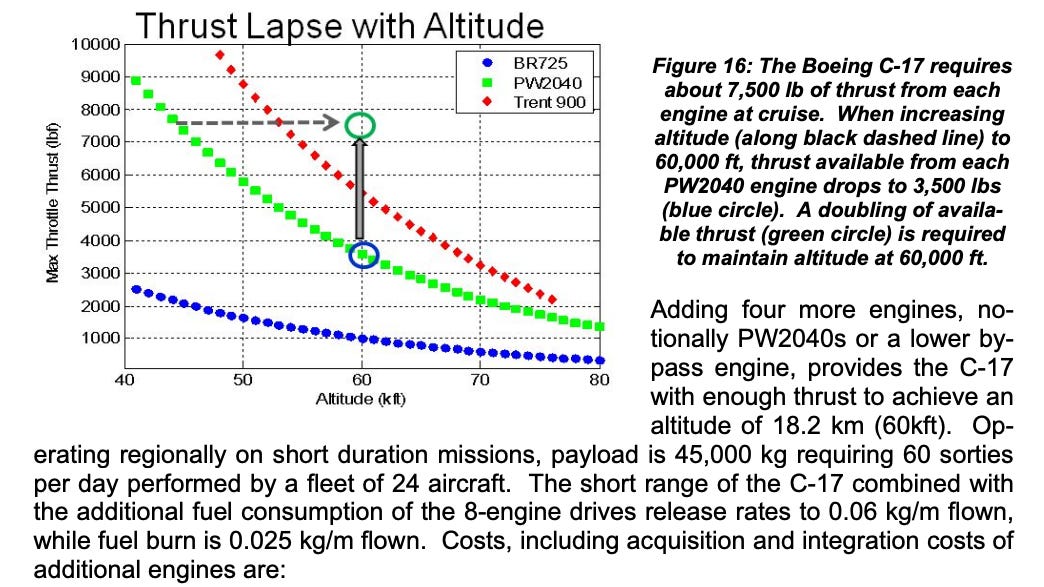
The Boeing C-17 looks promising:
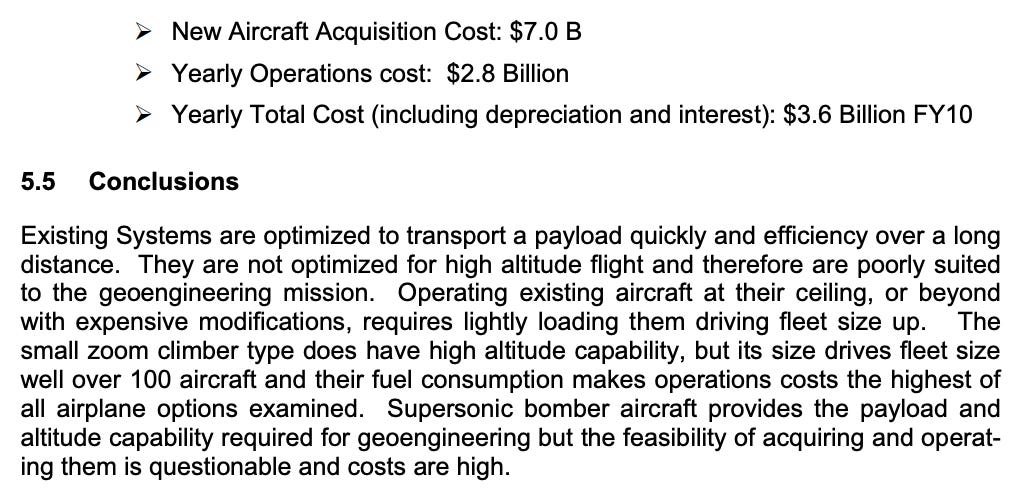
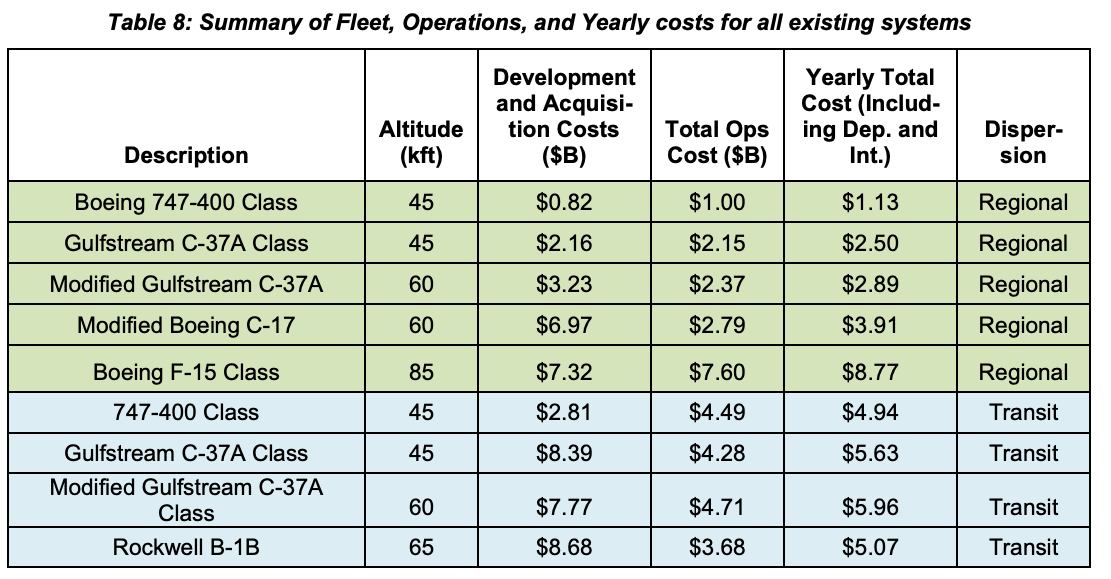
Now for the yearly estimates of “dispersion” for different fleets & operations:
The document goes on to examine airships on page 50 & on.
Then they explore rocket-powered gliders (too costly) on page 62.
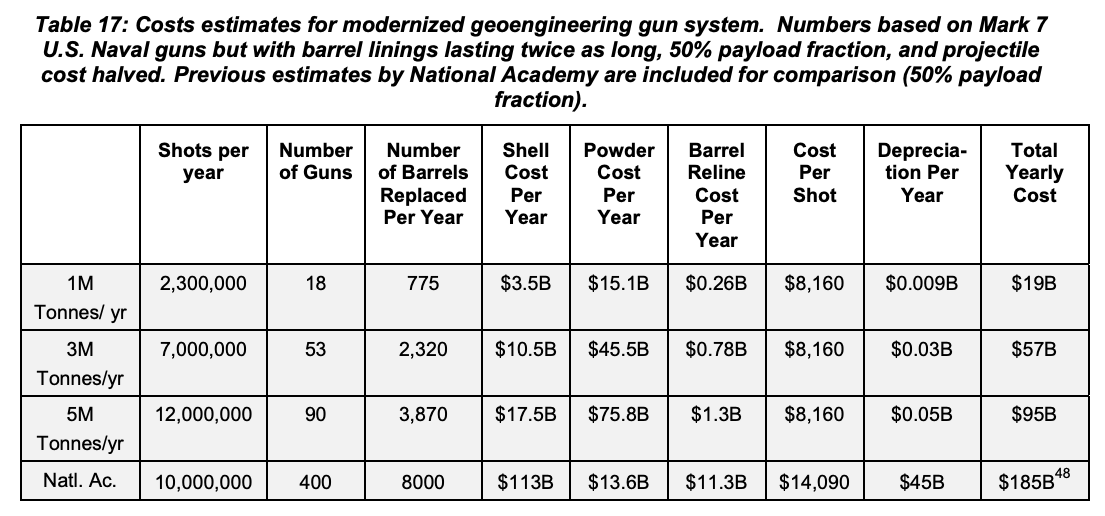
This, I found interesting (considering the Navy already has this technology developed). Cost Estimates for modernized geoengineering gun system:
But we can move on because:
”8.2.2 Conclusions While costs calculated here and those from the National Academy are comparable, the gun system is too expensive to be competitive with airplanes and airships. For this system to be competitive, cost per kilogram must be reduced significantly by reducing projectile cost or increasing projectile payload to reduce number of shots required. That said, the benefit of 30.4 km (100kft) capability may justify the higher cost of the gun system.”
On Page 68-73: Floating Platform with Slurry Pipe / Gas Pipe
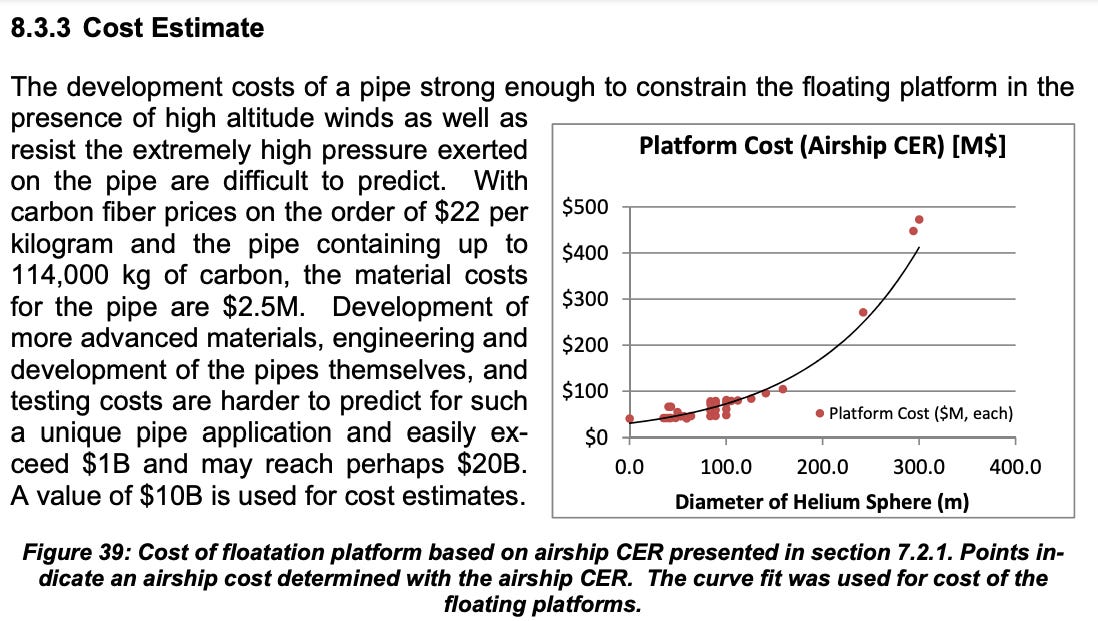
Here was one example they gave:
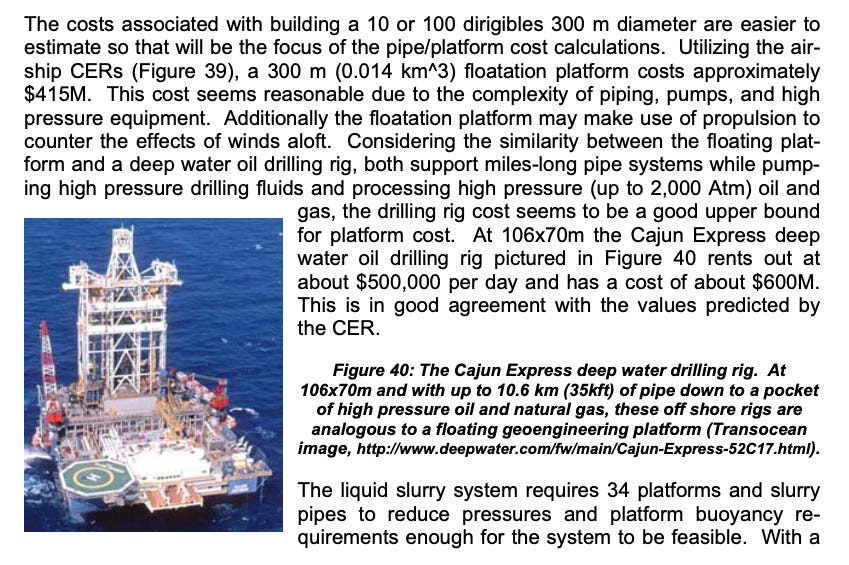
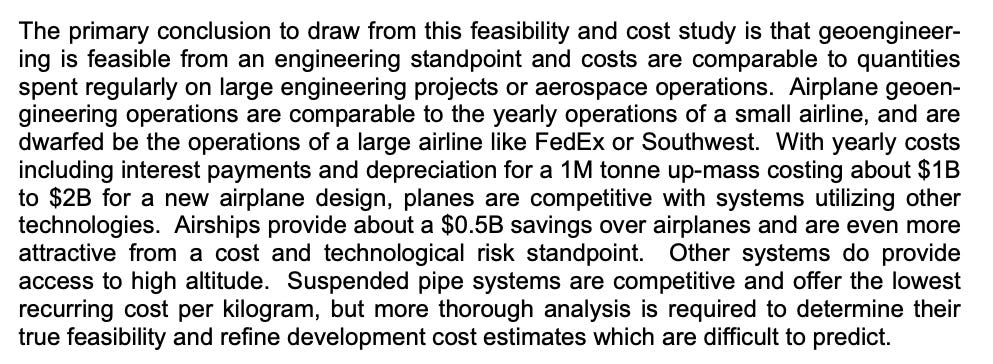
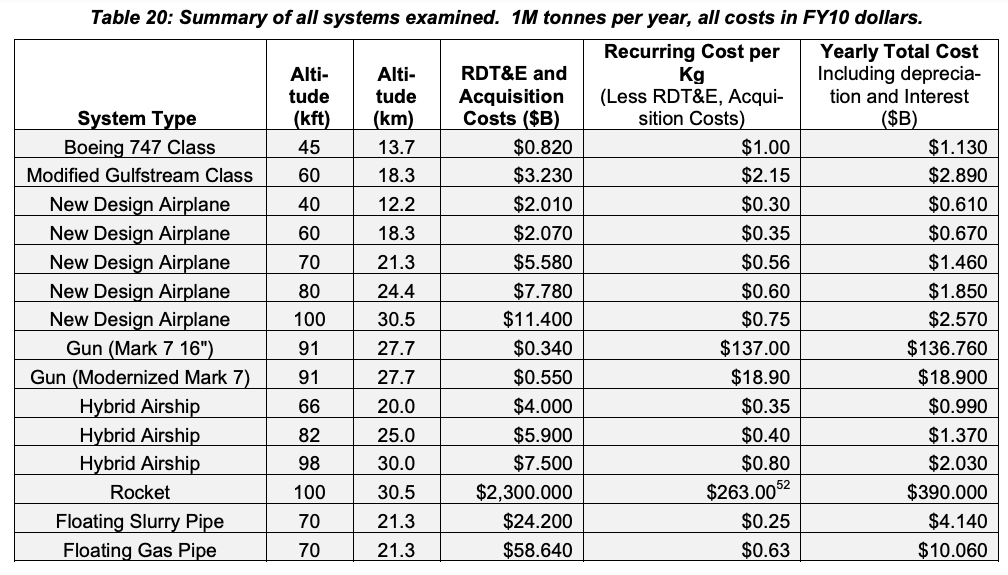
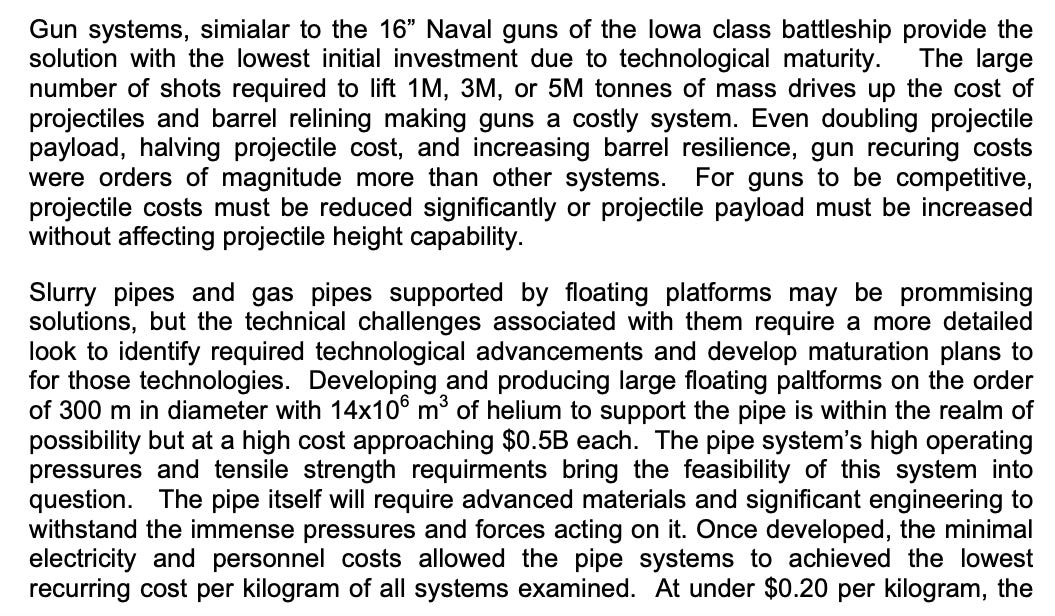
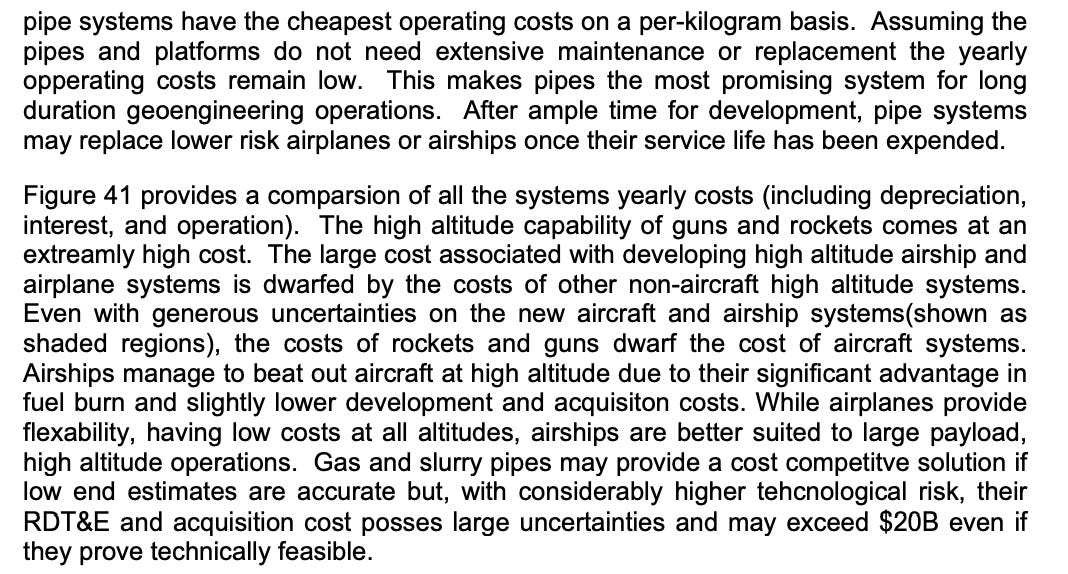
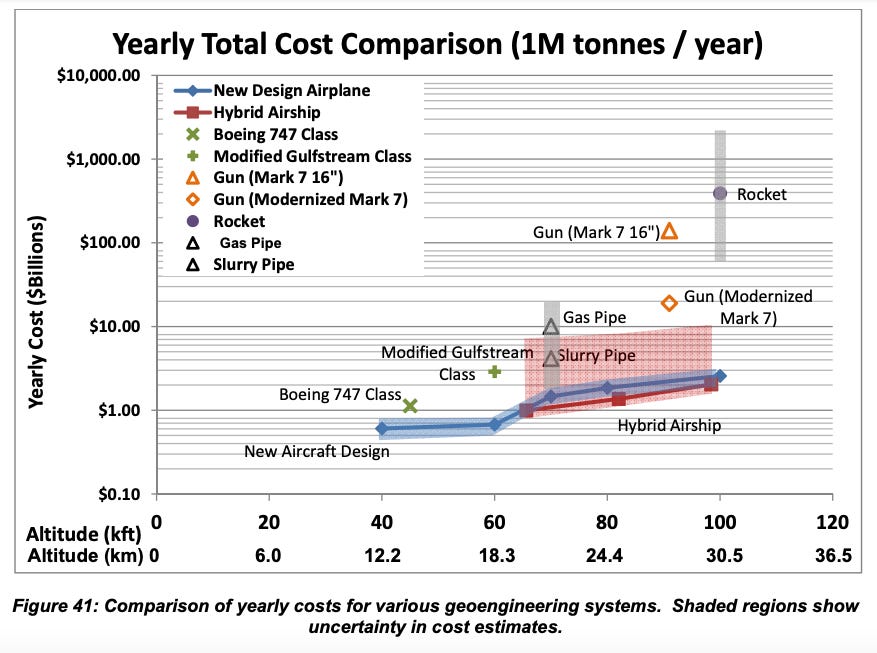
At the end, calculating the cost for different geoengineering platforms looked like this (for only 1,000,000 of the potentially 5,000,000 tonnes of geoengineering “payload.”
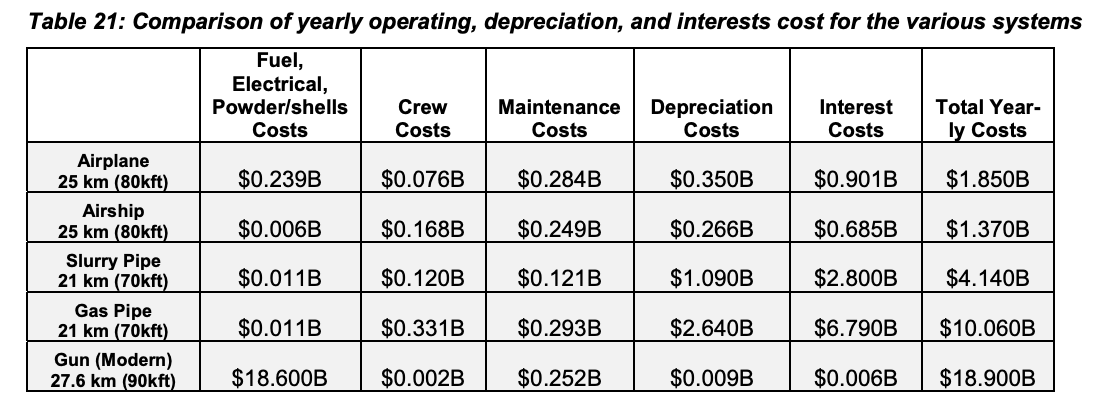
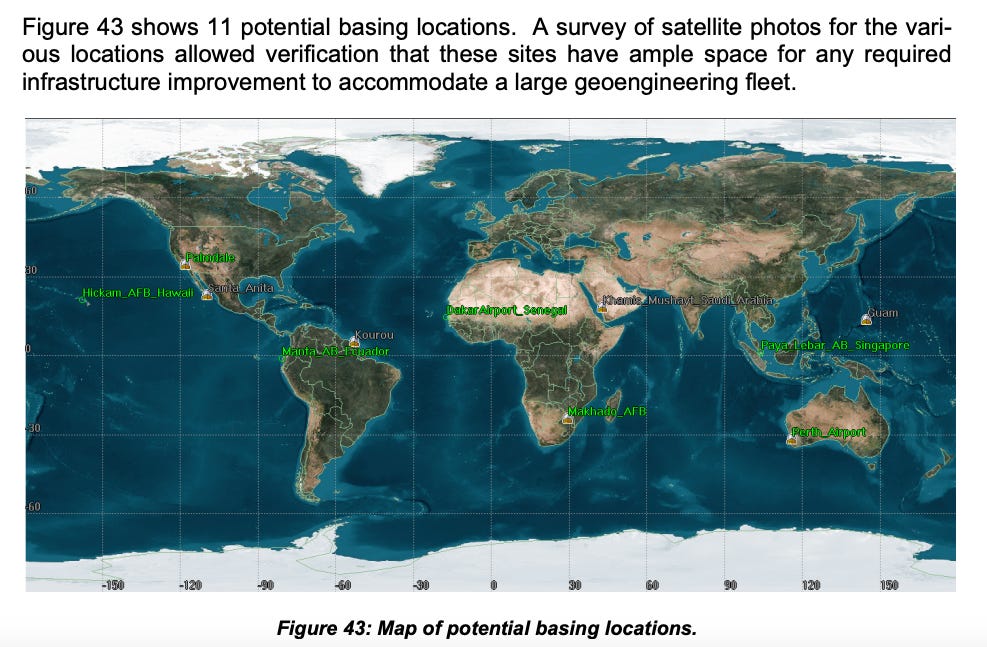
Now, for the geoengineering BASES: Page 80:
REMEMBER, this was published in 2011. Fifteen years ago.
That’s all for now. Just a document I thought was worth preserving. It might not be a bad idea to pay attention to how the trillions flow…where do they go?
Love, Kat