Glyphosate kills.
An interaction with my neighbor.

A few weeks ago, I discovered my neighbor’s landscapers were dousing his acreage with a glyphosate-based product. My post:
His entire property is dead. The entire property was sprayed. It rained less than one week later, MAJOR downpour. I can’t enjoy the local ditch without thinking about the toxic load within it.
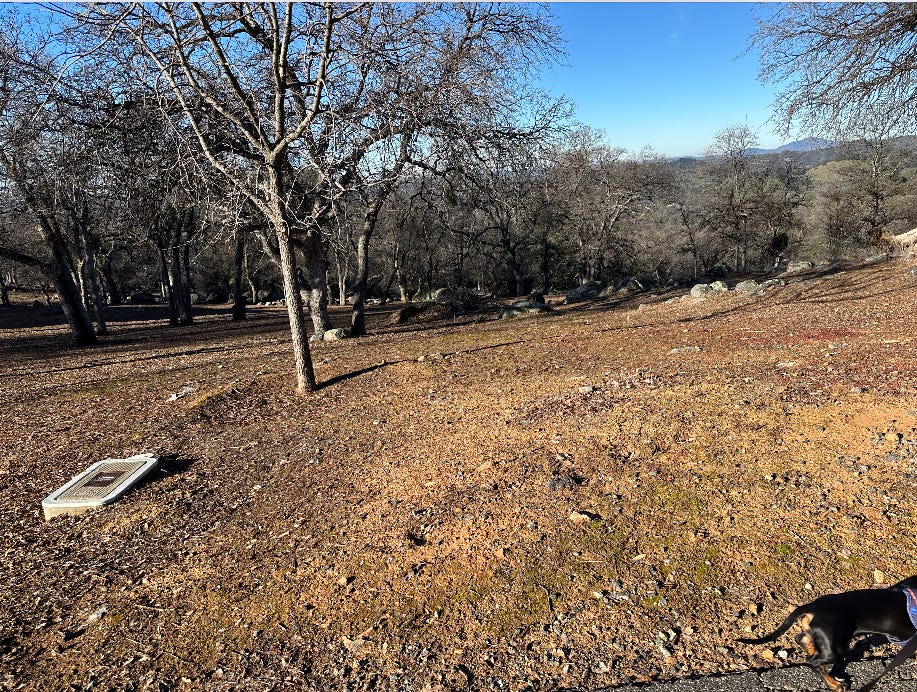
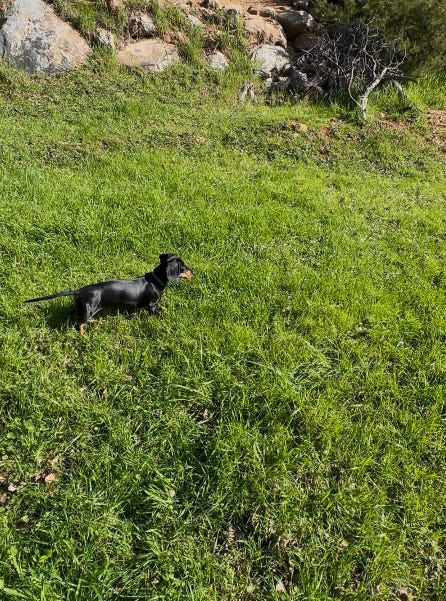
Here is what our land should look like right now. Big difference:
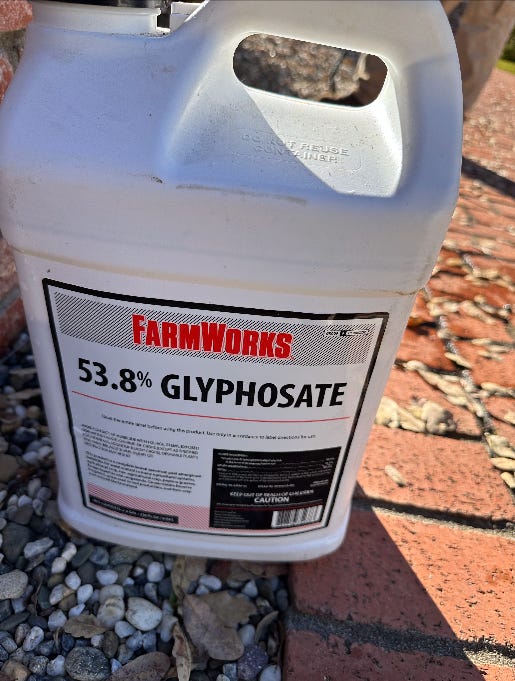
On the day I saw the landscapers liberally spraying the entire ground above me, I went up to see what they were using. Here’s the product:
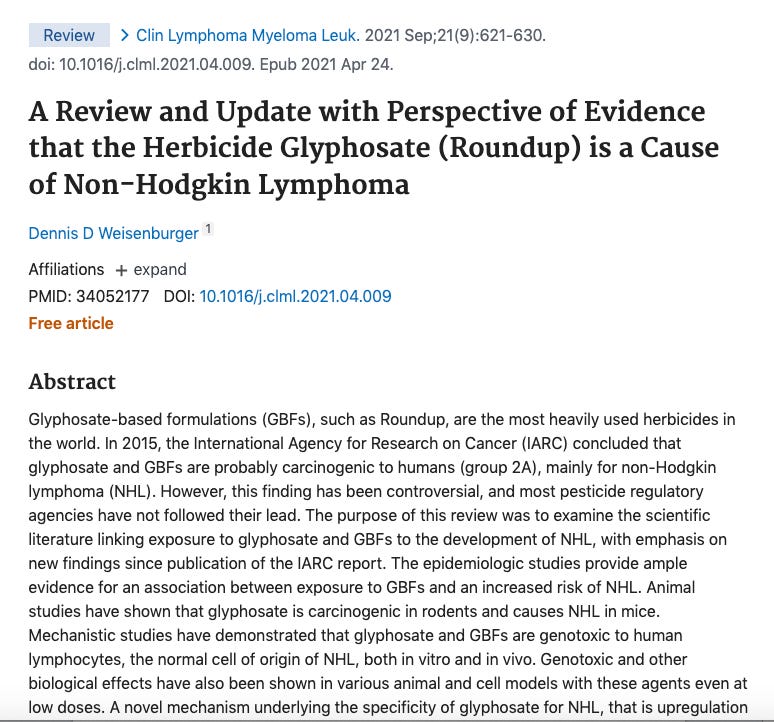
I knocked on his door and politely shared my concerns with him about my discovery of how harmful glyphosate is for the environment, animals, and humans. I shared how my own father was diagnosed with Non-Hodgkins Lymphoma after decades of glyphosate use on a large property. Glyphosate is carcinogenic, full-stop.
He was unaware that his landscapers were using it, and thanked me for letting him know.
I thought my message had been receieved, until I got a lengthy letter in the mail.
In the letter, he thanked me for my concern, and proceeded to tell me about how he was doing his part to “protect our community” from wildfire. He attempted to justify the use of this toxic agent by sharing an eleven-page print-out of a summary written by AI (called “EvidenceAI”). He essentially told me that he would continue using it.
His letter ended with “I share your hope for something better in the future,” and “Until alternatives are available and proven effective, I am trying to balance current tools responsibly,” “using the lowest-risk methods available while addressing a very real and immediate safety concern for my family and our community.” (referring to fire-risk).
My strong opinion: We need to nip this in the bud right here and now. It’s time to step out and share information with our neighbors, friends, and families if we hope to reduce our exposure to harmful chemicals.
I know, it’s a major time-suck. But it’s important to start the ripple effect from your own front-yards. Put up “NO-SPRAY ZONE” signs. People will notice.
Tell your local reps that you don’t want them to use glyphosate (like CalTrans does along roads):
My response letter is below. I address my issue with his use of AI to justify the safety and efficacy of glyphosate, and shared links to the Monsanto Papers and studies that I actually hope he reads for himself. Also, please feel free to share this with those around you who may not yet fully realize the detrimental effects of using glyphosate.
Love, Kat
Dear (so and so),
I appreciate your thoughtful letter, and I am glad that you took the time to stop and think about the product you’re using and it’s potential impacts on environmental, plant, animal, and human health.
Fire risk is a very real concern, and I’m sorry for the loss of life and property from some of the fires we’ve experienced in our state over the past few years.
Unfortunately, there was much more at play (poor leadership, shoddy record keeping, poor communication, empty reservoirs, etc) that led to destruction that never needed to happen.
Thankfully, we live near a very responsive CalFire team. Also, wet grass is not a fire-risk.
Death from NHL is far greater than death from poorly managed fires.
In lieu of glyphosate-based applications, why not consider paying teens to hand-weed, and landscapers to cut long grass once or twice a year? The benefit? More jobs (yay!) and a much healthier alternative to toxic herbicides.
At the rate glyphosate is being used for big-agriculture and on private properties, it has become ubiquitous in our environment. You can attribute it’s widespread use to the ecocide happening all around us. It is “effective,” because it kills everything. It kills the beneficial insects and pollinators that we and other wildlife depends upon. And cumulative exposure will eventually bite us all in the ass.
I reviewed your Evidence AI compilation. Unfortunately, AI has some important limitations worth noting:
AI is merely a data-scraper. It does not check for bias, misinformation, or conflicts of interest. It often can share misinformation as a result. The summary you provided regurgitates the paid-for PR spin and data that is available on the internet, and as you can imagine…chemical corporations (and pharma) have indispensable funds to shape any outcome they’d like.
We must fact-check the AI results, ourselves; we must also keep bias and conflicts of interest in mind. If you were unaware that Monsanto had employees ghostwrite studies and place the names of scientists on the papers, now you know.
https://pubmed.ncbi.nlm.nih.gov/37424374/
Please look up “The Monsanto Papers.”
The cumulative exposure matters: (https://pmc.ncbi.nlm.nih.gov/articles/PMC6706269/)
I’d like you to know, the EPA has a history of colluding with Monsanto (now owned by Bayer Crop Sciences) to cover up the harmful effects of glyphosate.
EPA staff (Jess Rowland) is known for blocking independent safety reviews by ATSDR of glyphosate.
I would encourage you to take the time to read through some internal documents, “The Monsanto Papers” found here:
https://www.wisnerbaum.com/toxic-tort-law/monsanto-roundup-lawsuit/monsanto-papers/
You will also find more on https://usrtk.org/monsanto-papers/, where you can read some of the internal documents and emails.
As you’re aware, chemical corporations (including the pharmaceutical industry) have the funds to manipulate public opinion, corrupt the scientists, manipulate the endpoints of clinical trials for a desired outcome, etc.
Statistics don’t lie, but statisticians do.
I understand you would like to believe that glyphosate is not harmful to the environment, animals, and people. Unfortunately, that isn’t the case. If you read the intro to what the Monsanto Papers reveal, you may come to recognize that you either wish to look the other way or face the evidence and find healthier alternatives. From the website on what the Monsanto papers reveal:
Systematic Corporate Influence Campaign
The documents reveal not isolated incidents of misconduct, but a coordinated, multi-decade strategy that extended from academic journals to government agencies. Internal communications show company executives directly involved in strategies to manipulate scientific literature and regulatory processes, demonstrating how corporate resources were deployed to shape public discourse about product safety.
Sophisticated Scientific Manipulation
The papers expose extensive ghostwriting practices where Monsanto employees or contractors wrote scientific articles published under the names of supposedly independent researchers. The most prominent example involved a 2000 publication by Williams et al. that has been frequently cited as evidence of glyphosate’s safety, but internal emails revealed that Monsanto scientists had substantially drafted the manuscript while external authors received primary credit.
Regulatory Capture at the Highest Levels
Among the most disturbing revelations were extensive coordination between Monsanto and officials at the Environmental Protection Agency (EPA). Internal emails revealed a particularly troubling relationship with Jess Rowland, a senior EPA official leading the agency’s assessment of glyphosate’s cancer risk, who coordinated with Monsanto to suppress independent safety reviews.
Intelligence Operations Against Critics
The documents revealed the creation of Monsanto’s “Intelligence Fusion Center” - a sophisticated monitoring operation that tracked journalists, activists, and scientists critical of the company. This intelligence gathering extended to personal character assassination campaigns, mirroring tactics used by the tobacco industry to attack scientists studying smoking-related health risks.
Broader Implications for Corporate Accountability
The Monsanto Papers exposed fundamental vulnerabilities in:
Scientific Publishing Systems: How corporations can systematically corrupt research literature.
Regulatory Independence: The dangers of industry capture of government agencies.
Public Health Protection: How corporate influence can undermine safety assessments.
Democratic Discourse: The use of sophisticated propaganda techniques to manipulate public opinion.
Here are some studies that EvidenceAI didn’t appear to review:
Exposure to glyphosate-based herbicides and risk for non-Hodgkin lymphoma: A meta-analysis and supporting evidence: https://www.sciencedirect.com/science/article/abs/pii/S1383574218300887
Exposure to glyphosate and risk of non-Hodgkin lymphoma and multiple myeloma: an updated meta-analysis: https://pubmed.ncbi.nlm.nih.gov/32096774/
Effects of the Herbicide Glyphosate on Honey Bee Sensory and Cognitive Abilities: Individual Impairments with Implications for the Hive: https://pmc.ncbi.nlm.nih.gov/articles/PMC6835870/
Is glyphosate toxic to bees? A meta-analytical review: https://www.sciencedirect.com/science/article/abs/pii/S0048969721004654
“Recently, the presence of glyphosate residues and degradation products have been confirmed from diverse agricultural habitats all across the planet, which has drawn the attention to potential effects of these residues in soil on the biology and ecology of organisms (Maggi et al., 2020; Fuchs et al., 2021). Glyphosate is proclaimed to pose negligible ecological risks because it is assumed to be degraded quickly by soil microorganisms into aminomethylphosphonic acid (AMPA) and sucrose (Borggaard and Gimsing, 2008). However, accumulating evidence shows that the rate of glyphosate degradation depends on environmental conditions and may be slow, especially in colder climates (Helander et al., 2012, 2018). In addition, glyphosate residues have been shown to affect diverse soil organisms which in turn can affect plants and their interactions with the environment (Aristilde et al., 2017; Helander et al., 2018, 2019; Niemeyer et al., 2018; Rainio et al., 2020). Experiments with low glyphosate doses showed physiological changes in plants, such as altered photosynthesis (Gomes et al., 2014, 2017; Serra et al., 2015; Soares et al., 2020), oxidative stress (Spormann et al., 2019), tannin biosynthesis (Ossipov et al., 2003) or change of plant volatile composition (D’Alessandro et al., 2006). However, it is unknown how residues of GBH in soil affect core plant physiological processes, such as phytohormone biosynthesis. Phytohormones regulate plant developmental processes as well as their interactions with the biotic environment ranging from antagonistic pathogens and herbivores to mutualistic microbes and beneficial insects (Robert-Seilaniantz et al., 2011; Gruden et al., 2020).”
Link: https://www.frontiersin.org/journals/plant-science/articles/10.3389/fpls.2021.787958/full
Pleiotropic Outcomes of Glyphosate Exposure: From Organ Damage to Effects on Inflammation, Cancer, Reproduction and Development.
https://pmc.ncbi.nlm.nih.gov/articles/PMC8618927/
“Glyphosate is widely used worldwide as a potent herbicide. Due to its ubiquitous use, it is detectable in air, water and foodstuffs and can accumulate in human biological fluids and tissues representing a severe human health risk. In plants, glyphosate acts as an inhibitor of the shikimate pathway, which is absent in vertebrates. Due to this, international scientific authorities have long-considered glyphosate as a compound that has no or weak toxicity in humans. However, increasing evidence has highlighted the toxicity of glyphosate and its formulations in animals and human cells and tissues. Thus, despite the extension of the authorization of the use of glyphosate in Europe until 2022, several countries have begun to take precautionary measures to reduce its diffusion. Glyphosate has been detected in urine, blood and maternal milk and has been found to induce the generation of reactive oxygen species (ROS) and several cytotoxic and genotoxic effects in vitro and in animal models directly or indirectly through its metabolite, aminomethylphosphonic acid (AMPA). This review aims to summarize the more relevant findings on the biological effects and underlying molecular mechanisms of glyphosate, with a particular focus on glyphosate’s potential to induce inflammation, DNA damage and alterations in gene expression profiles as well as adverse effects on reproduction and development
Birth defects, season of conception, and sex of children born to pesticide applicators living in the Red River Valley of Minnesota, USA.
https://pmc.ncbi.nlm.nih.gov/articles/PMC1241196/
Mechanisms underlying the neurotoxicity induced by glyphosate-based herbicide in immature rat hippocampus: involvement of glutamate excitotoxicity.
https://pubmed.ncbi.nlm.nih.gov/24636977/
Ingredient in Common Weed Killer Impairs Insect Immune Systems, Study Suggests
Glyphosate does bioaccumulate.
https://www.sciencedirect.com/science/article/abs/pii/S0269749108004053
“This study shows that glyphosate accumulates in L. variegatus, despite the hydrophilic character of the herbicide. The accumulated amounts of glyphosate and the added surfactants in Roundup Ultra cause an elevation of the biotransformation enzyme sGST at non-toxic concentrations.”
Treatment by glyphosate-based herbicide alters life history parameters of the rose-grain aphid Metopolophium dirhodum
https://www.nature.com/articles/srep27801
Glyphosate inhibits melanization and increases susceptibility to infection in insects:
“Glyphosate—the most widely used herbicide globally—inhibits melanin production, which could have wide-ranging implications in the health of many organisms, including insects.”
https://journals.plos.org/plosbiology/article?id=10.1371/journal.pbio.3001182
Just Released Docs Show Monsanto ‘Executives Colluding With Corrupted EPA Officials to Manipulate Scientific Data’ Link: https://www.ecowatch.com/monsanto-papers-2467891575.html
I understand your desire to reduce wildfire risk. Thankfully, we live right next to the CalFire airport and the response time is unlike any other area I’ve lived.
Using glyphosate to kill vegetation kills LIFE. I cherish my animal companions and bees on my property (as you recall, living in the concrete jungle is devoid of beneficial insects and even bird song).
I’ve been fighting the use of glyphosate for nearly 10 years. I’ve been proactive in petitions, and contacting representatives to stop the attempts to give a liability shield to chemical corporations.
I will consider sending a letter to all of our neighbors to urge them to consider alternatives, as you are not the only one relying on this popular product!
I respectfully ask you to reconsider the evidence I’ve shared, above. Thank you for your time and your kind letter. I remain very passionate about keeping my environment and community as healthy as possible. I do what I can to grow my own food, shop hyper-local, and nurture the wildlife around me. I sure love my pollinators, birds, and the rare butterfly I see maybe once a year.
Thank you,
A lovely comment and tip from a friend!
"A really great way to address wildfire risk is through managed burns. While it is best to be able to burn through acreage, that is much more challenging to manage. Burn piles are also an effective way of managing extra vegetation. The ash from burn piles is highly beneficial to the soil. It is filled with nutrients and supports a healthy soil pH which dramatically affects the ability of plants to uptake water and nutrients from the soil. Here's a book on the topic, which also shares ways other than fire to support forest health: https://suddenoaklife.org/2024/05/29/new-release-forged-by-fire-the-cultural-tending-of-trees-and-forests-in-big-sur-and-beyond/
Oh I hear you. I have a neighbor who's retired from Bayer who sprays Round-Up not only on his property but alongside the road in the ditches, where the water percolates into our common water table for our wells and drinking water. I asked him to please not do that and explained that it's a carcinogen. You would think he might have a clue about that. He said, "well if you can find something better tell me," so I told him about vinegar, salt and dish soap, but he continues. He killed off all of his bees and has no clue about the connection.
Boy I hope they don't get legal immunity.
Thanks for all the resources and your continual attention to the poisons we are being subjected to without our consent. 🙏🏼